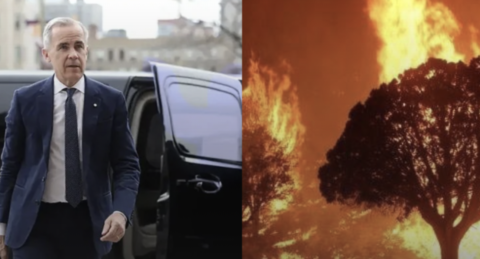
Last week, Mark Carney implemented a long-standing Conservative policy proposal – a pause on the federal Fuel Excise Tax. This ill-advised policy forgoes much needed revenue to invest in real affordability solutions, may increase oil and gas companies’ windfall profits, and is likely to exacerbate Canada’s escalating affordability crisis.
While the affordability crisis certainly merits a significant government response, there is no guarantee that this measure will even work to lower prices for consumers. Under our existing system, the government does not control the price of gas – gas retailers do. What Carney’s policy has done is reduced one of the costs that gas retailers pay, but whether they decide to pass those savings on to consumers is up to them.
Previous research shows that gas retailers rarely pass on their full cost savings when sales or excise taxes are lowered – they lower their prices a little, and keep the rest of those savings for themselves. Canadian airlines have already indicated that, well, consumers shouldn’t really expect to see much savings from the government’s new policy.
That $2.4 billion in revenue that the government is giving up will necessitate further cuts to already-starved public services. A small chunk might go back to you, but it’s likely that corporate intermediaries will take the lion’s share. And while the government currently plans to reinstate the tax in September, remember this: when the Ontario government “temporarily” lowered its fuel tax in 2022, it was never restored.
What makes this policy particularly bad, however, is its longer-term impacts. The root cause of the affordability crisis is not government taxes – it’s our reliance on large oligopolistic corporations and volatile global markets to provide essential goods and services.
The 27 per cent increase in gas prices since the start of the U.S.’ war on Iran has nothing to do with taxes and everything to do with our reliance on privately-owned fossil fuels for transportation. The same oil and gas companies who are in line for a $90 billion corporate windfall and have indicated that they will return those profits to shareholders instead of reinvesting them. By removing the Fuel Excise Tax in response, the government is validating their profiteering, giving them every incentive to do this again during the next crisis.
This is before we even talk about the climate crisis, which has seemingly disappeared from public consciousness despite the fact that every year is setting new temperature records. By lowering the price of fossil fuels and allowing oil and gas companies to keep these windfall profits, the government is signalling once again that it has no concern for the climate. We could instead be using these windfall profits to invest in a publicly-owned clean electricity grid and clean public transportation system that would reduce our reliance on fossil fuels. This would also alleviate the affordability crisis since electricity prices could be publicly regulated and are not nearly as volatile as oil prices.
Instead, the government should implement what the EU did in 2022, what Canada did during both world wars, and what civil society groups have been calling for for ages: a windfall profits tax on the oil and gas industry. A 33 per cent tax on windfall profits could raise $18 billion this year. A 75 per cent tax, like we implemented during the Second World War, could raise $46 billion.
This revenue could be used to both directly compensate consumers for higher short-term costs through cash transfers, and to invest in the transition away from our reliance on volatile fossil fuel markets. It would be not just a band-aid but a treatment plan. A treatment that involves bucking our addiction to fossil fuels and providing Canadians with sustainable, affordable energy for the long-term.
This article originally appeared in Ricochet.
